88888888888888888888888888888888888888888888888888888888888888888888888888888888888888888888888888888888888888
Sumedho, Ajahn
88888888888888888888888888888888888888888888888888888888888888888888888888888888888888888888888888888888888888
Ajahn Sumedho | |
|---|---|
 | |
| Personal life | |
| Born | Robert Karr Jackman July 27, 1934 Seattle, Washington, U.S. |
| Religious life | |
| Religion | Buddhism |
| Order | Mahā Nikāya |
| School | Theravāda |
| Lineage | Thai Forest Tradition |
| Ordination | 1967 (59 years ago) |
| Senior posting | |
| Teacher | Ajahn Chah |
| Post |
|
88888888888888888888888888888888888888888888888888888888888888888888888888888888888888888888888888888888888888
"Yesterday is a memory
Tomorrow is the unknown
Now is the knowing."
88888888888888888888888888888888888888888888888888888888888888888888888888888888888888888888888888888888888888
Ajahn Sumedho is an American-born Buddhist monk and senior Western disciple of Ajahn Chah, instrumental in establishing the Thai Forest Tradition in the West.
Ajahn Sumedho, born Robert Karr Jackman on July 27, 1934, in Seattle, Washington, is a prominent figure in Theravāda Buddhism and the Thai Forest Tradition . He served as a United States Navy medic during the Korean War and later completed a BA in Far Eastern studies and an MA in South Asian studies at the University of California, Berkeley . He also worked with the Peace Corps in Borneo as an English teacher before encountering Buddhism in Southeast Asia .
In 1966, he became a novice monk (samanera) at Wat Sri Saket in Nong Khai, Thailand, and was fully ordained as a bhikkhu in 1967 . He trained for ten years under Ajahn Chah at Wat Nong Pah Pong, a forest monastery in Ubon Province, Thailand, and is considered Ajahn Chah’s most influential Western disciple . In 1975, he helped establish Wat Pa Nanachat, the International Forest Monastery in Thailand, designed for training non-Thai students .
Ajahn Sumedho moved to England in 1977 to help establish the Thai Forest monastic tradition in the West. He founded Cittaviveka (Chithurst Buddhist Monastery) in West Sussex in 1979 and Amaravati Buddhist Monastery in Hertfordshire in 1984 . Over more than three decades in Britain, he taught extensively worldwide, guided numerous aspirants into monastic life, and authorized the establishment of several other monasteries . In 2010, he stepped back from abbatial duties to practice in more secluded environments .
Ajahn Sumedho is known for his accessible and humorous teaching style, emphasizing mindfulness, awareness, and compassion in daily life . His teachings have been widely recorded, transcribed, and published, making him a seminal figure in transmitting the Buddha’s teachings to Western audiences . He continues to influence both monastic and lay practitioners through his writings, talks, and guidance within the Forest Sangha, a global community following Ajahn Chah’s Thai Forest tradition .
88888888888888888888888888888888888888888888888888888888888888888888888888888888888888888888888888888888888888
Ajahn Sumedho (born 27 July 1934) is an American Buddhist monk. He was ordained in 1967, and was instrumental in establishing Wat Pa Nanachat in Thailand and the Cittaviveka and Amaravati monasteries in England. One of the most senior Western representatives of the Thai Forest Tradition of Theravāda Buddhism, Sumedho is considered a seminal figure in the transmission of the Buddha's teachings to the West.
Biography
Ajahn Sumedho, also known as Luang Por Sumedho, was born Robert Karr Jackman in Seattle, Washington, in 1934.[1][2] (Sumedho is his Dhamma name, and Ajahn, meaning "teacher", and Luang Por, meaning "venerable father", are honorific terms.) During the Korean War he served for four years from the age of 18 as a United States Navy medic. He then did a BA in Far Eastern studies and graduated in 1963 with an MA in South Asian studies at the University of California, Berkeley. After a year as a Red Cross social worker, Jackman served with the Peace Corps in Borneo from 1964 to 1966 as an English teacher. On break in Singapore, sitting one morning in a sidewalk café, he watched a Buddhist monk walk by and thought to himself, "That looks interesting." In 1966, he became a novice or samanera at Wat Sri Saket in Nong Khai, northeast Thailand, and spent his novice year in a hut at Wat Noen Phra Nao Wanaram, a vipassanā meditation centre in the same town. He took bhikkhu ordination at Wat Sri Saket on 8 July 1967.[3]
From 1967 to 1977 at Wat Nong Pah Pong, he trained under Ajahn Chah. He has come to be regarded as the latter's most influential Western disciple. In 1975, he helped to establish and became the first abbot of the International Forest Monastery, Wat Pa Nanachat in northeast Thailand founded by Ajahn Chah for training his non-Thai students. In 1977, Ajahn Sumedho accompanied Ajahn Chah on a visit to England. After observing a keen interest in Buddhism among Westerners, Ajahn Chah encouraged Ajahn Sumedho to remain in England for the purpose of establishing a branch monastery in the UK. This became Cittaviveka Forest Monastery in West Sussex.
Ajahn Sumedho was granted authority to ordain others as monks shortly after he established Cittaviveka Forest Monastery. He then established a ten precept ordination lineage for women, "Siladhara".
Until his retirement, Ajahn Sumedho was the abbot of Amaravati Buddhist Monastery near Hemel Hempstead in England, which was established in 1984. Amaravati is part of the network of monasteries and Buddhist centres in the lineage of Ajahn Chah, which now extends across the world, from Thailand, New Zealand and Australia, to Europe, Canada, and the United States. Ajahn Sumedho played an instrumental role in building this international monastic community.
Ajahn Sumedho's imminent retirement was announced in February 2010, and he retired in November of that year. His successor is the English monk Ajahn Amaro, hitherto co-abbot of the Abhayagiri branch monastery in California's Redwood Valley. Ajahn Sumedho returned to Amaravati Buddhist Monastery near Hemel Hempstead in England in 2020 and now resides there.
Teachings


Ajahn Sumedho is a prominent figure in the Thai Forest Tradition. His teachings are very direct, practical, simple, and down to earth. In his talks and sermons he stresses the quality of immediate intuitive awareness and the integration of this kind of awareness into daily life. Like most teachers in the Forest Tradition, Ajahn Sumedho tends to avoid intellectual abstractions of the Buddhist teachings and focuses almost exclusively on their practical applications, that is, developing awareness and wisdom in daily life. His most consistent advice can be paraphrased as to see things the way that they actually are rather than the way that we want or don't want them to be ("Right now, it's like this..."). He is known for his engaging and witty communication style, in which he challenges his listeners to practice and see for themselves. Students have noted that he engages his hearers with an infectious sense of humor, suffused with much loving kindness, often weaving amusing anecdotes from his experiences as a monk into his talks on meditation practice and how to experience life ("Everything belongs").[4]
Sound of Silence
A meditation technique taught and used by Ajahn Sumedho involves resting in what he calls "the sound of silence".[5] He talks at length about this technique in one of his books titled The Way It Is.[6] Ajahn Sumedho said that he was directly influenced by Edward Salim Michael's book, The Way of Inner Vigilance (republished in 2010 with the new title, The Law of Attention, Nada Yoga and the Way of Inner Vigilance and for which Ajahn Sumedho wrote a preface).
The Sound of Silence is also the title of one of Ajahn Sumedho's books (published by Wisdom Publications in 2007).[7]
Thai honorific ranks

- 5 December 1992 – Phra Sumedhacarya (พระสุเมธาจารย์)[8]
- 12 August 2004 – Phra Rajasumedhajahn Pisanbhavanakit Mahakanisorn Bovornsangaram Kamavasi (พระราชสุเมธาจารย์ พิศาลภาวนากิจ มหาคณิสสร บวรสังฆาราม คามวาสี)[9]
- 28 July 2019 – Phra Thep Nyanavithet Visethbodhidhammakhun Viboonbhavananusit Mahakanisorn Bovornsangaram Kamavasi (พระเทพญาณวิเทศ วิเศษโพธิธรรมคุณ วิบูลภาวนานุสิฐ มหาคณิสสร บวรสังฆาราม คามวาสี)[10]
- 15 November 2020 – Phra Brohm Vajiranyan Paisan Vithetsasanakit Vichit Dhammapatipan Vipassananyan Wongsavisit Rajamanit Vajiralongkorn Mahakanisorn Bovornsangharam Kamavasi (พระพรหมวชิรญาณ ไพศาลวิเทศศาสนกิจ วิจิตรธรรมปฏิภาณ วิปัสสนาญาณวงศวิสิฐ ราชมานิตวชิราลงกรณ มหาคณิสสร บวรสังฆาราม คามวาสี)
Publications
References
- "Male Monastic Community » Amaravati Buddhist Monastery". Amaravati Buddhist Monastery.
- "Buddhist Masters and Their Organisations: Ajahn Sumedho". www.buddhanet.net. Archived from the original on May 14, 2011. Retrieved August 21, 2005.
- Ajahn Sumedho (July 27, 2024). No Birth. Amaravati Buddhist Monastery. Event occurs at 5:54.
January 1996 revisited the Kuti where I stayed in as a Samanera 1966-1967 at Wat Nern Panow, Nong Khai. Upasampada on 8 July 1967 at Wat Sri Saket, Nong Khai.
- "Ajahn Sumedho - teachings". forestsangha.org. Retrieved January 18, 2016.
- "The Sound of Silence" (PDF). abhayagiri.org. Retrieved September 28, 2016.
- "The Way It Is". amaravati.org. Retrieved January 18, 2016.
- "The Sound of Silence". Wisdom Publications. Retrieved January 18, 2016.
- ราชกิจจานุเบกษา, ประกาศสำนักนายกรัฐมนตรี เรื่อง พระราชทานสัญญาบัตรตั้งสมณศักดิ์, เล่ม 109, ตอนที่ 155 ง ฉบับพิเศษ, 5 ธันวาคม 2535, หน้า 17
- ราชกิจจานุเบกษา, ประกาศสำนักนายกรัฐมนตรี เรื่อง พระราชทานสัญญาบัตรตั้งสมณศักดิ์พระสงฆ์ไทยในต่างประเทศ, เล่ม 121, ตอนที่ 17 ข, 15 กันยายน 2547, หน้า 15
- ราชกิจจานุเบกษา, พระบรมราชโองการประกาศ เรื่อง พระราชทานสัญญาบัตรตั้งสมณศักดิ์, เล่ม 136, ตอนที่ 40 ข, 28 กรกฎาคม 2562, หน้า 11
88888888888888888888888888888888888888888888888888888888888888888888888888888888888888888888888888888888888888
In Buddhism, the "deathless" refers to nibbana, the unconditioned state beyond birth, death, and suffering, attainable through mindfulness and the relinquishing of attachment.
Meaning of the Deathless
The term "deathless" (Pāli: amata) signifies a state that is unborn, unconditioned, and free from the cycle of birth and death. Unlike ordinary phenomena, which arise and pass away, the deathless does not arise, does not cease, and is therefore beyond mortality and decay. It is synonymous with nibbana, the ultimate liberation from suffering and the cycle of rebirth (samsara) (Buddhism Stack Exchange, MN 64, MN 75) .
Attending to the Deathless
Buddhist practice emphasizes turning the mind away from conditioned states and inclining it toward the deathless. This involves recognizing the impermanent and dependent nature of all phenomena while cultivating awareness of the unconditioned element that is always present. Meditation on the deathless is not about creating or imagining something new; it is about noticing what has always been there, like the space in a room, which is often overlooked because it lacks form or excitement (Lion’s Roar) .
Mindfulness of Death
Mindfulness of death is a complementary practice that helps practitioners realize the urgency of spiritual work. By contemplating the inevitability and unpredictability of death, one develops alertness and detachment from worldly desires. This awareness encourages the practitioner to let go of clinging and craving, which are the conditions that bind consciousness to the cycle of rebirth (Dhammatalks) . The Buddha taught that understanding death in the present moment—such as being aware that each breath or bite of food could be the last—cultivates readiness to turn toward the deathless (Barre Center for Buddhist Studies) .
Characteristics of the Deathless
The deathless is described as peaceful, sublime, and free from sorrow, affliction, or despair. It is a state of unsupported consciousness, where cognition occurs without landing on or being attached to any object. This quality allows the mind to abide in a state beyond conditioned phenomena, neither supporting them nor being supported by them (Lion’s Roar) . Achieving this state involves relinquishing attachment, destroying craving, and cultivating dispassion, which leads to the cessation of suffering and the realization of nibbana (Buddhism Stack Exchange) .
Practical Implications
Experiencing the deathless transforms the perception of life and death. When the mind is dominated by Dhamma and equanimity, fear of death diminishes, and the body becomes secondary to the mind’s awareness of the unconditioned. This state can arise in both religious and non-religious contexts, but it is most fully realized through right understanding (sammādiṭṭhi) and ethical conduct, which align the mind with the path to liberation (Open Sangha Foundation) .
In summary, the deathless in Buddhism represents the ultimate freedom from birth, death, and suffering, accessible through mindfulness, ethical living, and meditative insight. It is both the goal of practice and the ever-present reality that can be directly experienced when the mind turns away from attachment and toward the unconditioned.
88888888888888888888888888888888888888888888888888888888888888888888888888888888888888888888888888888888888888

Ajahn Sumedho’s teachings emphasize mindfulness, letting go, and understanding life as it is.
Selected Quotes
- “A new day is here. Yesterday is a memory. Tomorrow is unknown. Now is the knowing.” This highlights the importance of living fully in the present moment .
- “Instead of becoming the world’s expert on Buddhism, just let go, let go, let go.” A reminder to release attachment to knowledge and control .
- “The mind of an enlightened human being is flexible and adaptable. The mind of the ignorant person is conditioned and fixed.” Emphasizing mental openness and awareness .
- “Whatever you think you are, that’s not what you are.” Encouraging self-inquiry and detachment from ego .
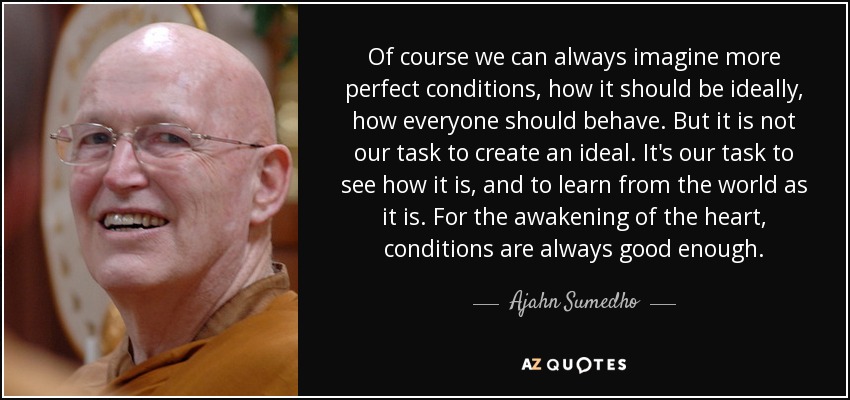
- “Of course we can always imagine more perfect conditions… But it is not our task to create an ideal. It’s our task to see how it is, and to learn from the world as it is. For the awakening of the heart, conditions are always good enough.” Teaching acceptance of reality .
- “Meditation is a skilful letting go: gently but with resolution.” On the practice of mindfulness and non-attachment .
- “We look directly into our suffering rather than try to become happy. The happiness that arises from this approach is reliable.” Encouraging facing challenges with awareness .
- “Thoughts are not the enemy; they are just thoughts. Don’t believe everything you think. The mind can be a wonderful friend or a terrible enemy.” Guidance on understanding and managing the mind .
- “The point is, the Four Stages are not for ego-development or attainment; they are a skilful means for recognizing the way we cling to things.” Insight into emotional habits and spiritual practice .
These quotes reflect Ajahn Sumedho’s focus on mindfulness, acceptance, and the practice of letting go, offering practical wisdom for both spiritual seekers and everyday life. They encourage awareness of the present, understanding suffering, and cultivating a flexible, compassionate mind.
88888888888888888888888888888888888888888888888888888888888888888888888888888888888888888888888888888888888888

88888888888888888888888888888888888888888888888888888888888888888888888888888888888888888888888888888888888888

No comments:
Post a Comment